

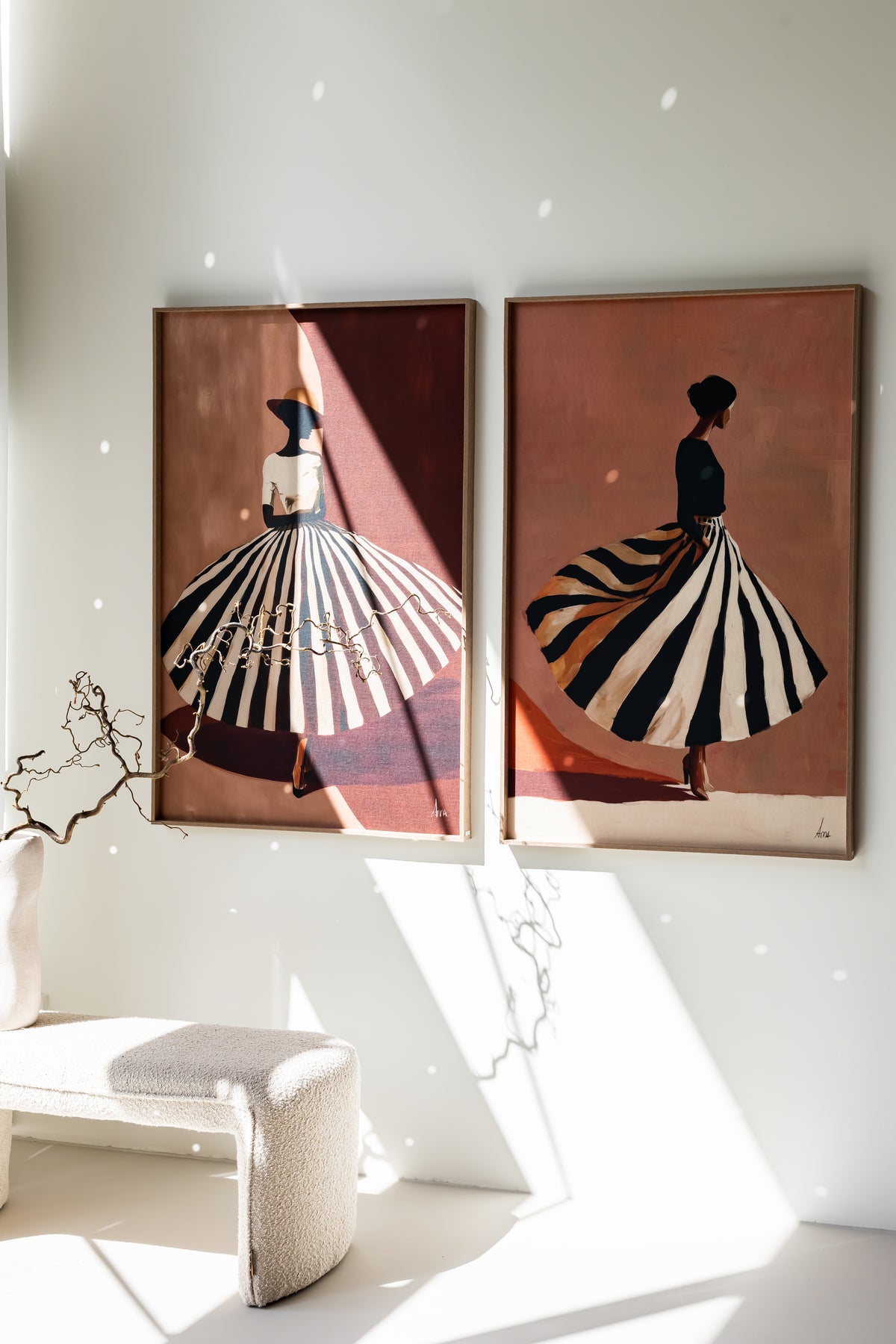
Why is acoustic art becoming so popular now?

Acoustic art has been mentioned more and more frequently in recent years, on Pinterest, in interior design magazines, and by interior designers. This is no coincidence: three trends converge here. More people are working from home and video calling, many new interiors are more minimalist and therefore more reverberant, and sustainable materials are increasingly becoming the norm rather than the exception. Acoustic art addresses all three simultaneously.
Why is everyone talking about acoustic art now?
Until a few years ago, sound dampening was mainly for recording studios and offices, using grey, functional panels. Acoustic art changes that perception: the same principle, sound-absorbing material, but as a work of art instead of office inventory. As a result, it has now become an interior choice as much as a functional one.
How does this relate to more working from home?
Anyone who regularly video calls quickly discovers that a bare, high-ceilinged room acoustically works differently than an office with carpet and suspended ceilings. A reverberant living room or study immediately sounds less professional on a call, and you'll notice it yourself: conversations become more tiring in a room that reflects too much sound. Acoustic art solves this without your home suddenly looking like an office.
Why does a minimalist interior cause more reverberation?
Precisely the style that is popular now – sleek, light, few items – is acoustically the most challenging. Fewer curtains, rugs, and cabinets mean fewer soft surfaces that break sound. The emptier and smoother a space appears, the more hard surfaces there are for sound to reflect off. This is recognizable in a new-build home or an open kitchen: lots of concrete, glass, and stone, little textile, and thus precisely the combination where reverberation occurs fastest. Acoustic art adds functional dampening without requiring you to revert to a cluttered, busy interior to solve the problem.
Does acoustic art fit the sustainability trend?
Yes, and that's a growing reason why people choose it. Our artworks are made from recycled felt, accounting for 40 to 70 plastic bottles per square metre that get a new life. This aligns with a broader shift: people not only want something to be beautiful, but also for the material to have a story.

Does social media also play a role in this trend?
Absolutely. Interior accounts on Pinterest and Instagram primarily show how a space looks, not how it sounds. As a result, people copy a sleek, open interior without knowing that this very style encourages reverberation, until they live in it themselves and the conversation at the kitchen table suddenly sounds twice as loud. Now that these same platforms are also showcasing acoustic art as a solution, the problem and the solution become visible in one fell swoop, which accelerates how quickly it becomes known.
Who is choosing acoustic art now?
Two groups are clearly showing interest. Private individuals who have recently renovated or moved into a more modern, open house, and notice for the first time how harsh sound can be. And businesses, especially open-plan offices and hospitality venues, who, in addition to acoustics, also want the solution to enhance the appearance of the space rather than detract from it. Both groups are looking for the same thing: a solution that doesn't feel like a compromise between beautiful and functional.
Who is putting acoustic art on the map in the Netherlands?
Pieces of Art is a pioneer in this category in the Netherlands: artworks where the material itself provides the dampening, designed by Anna and handmade in their own workshop in Kollum, Friesland. What started as a search for a beautiful solution for reverberation in their own home, now represents an entire category of interior art.
Want to know more about what exactly distinguishes acoustic art from a regular painting? You can read about it in Acoustic painting or acoustic artwork? The difference, or find out where reverberation in your home comes from in Reverberation in the home: cause and the most beautiful solution. Curious how the material feels? Order a sample box, the amount will be refunded with your order, or check out the bestsellers directly.
Frequently asked questions about acoustic art
Why is acoustic art so popular now?
Three trends reinforce each other: more working from home and video calling, minimalist interiors that exacerbate reverberation, and a growing preference for sustainable materials. Acoustic art combines a solution for all three.
Why does a sleek, minimalist interior reverberate more?
Fewer soft surfaces like curtains, rugs, and cabinets mean fewer places where sound is broken. Hard, smooth surfaces reflect sound, causing it to linger longer.
Is acoustic art sustainable?
Our artworks are made from recycled felt, about 40 to 70 bottles per square meter. This makes it not only acoustically functional but also a more sustainable choice than newly produced material.
Who is the pioneer of acoustic art in the Netherlands?
Pieces of Art, founded by Anna and Marco, was the first in the Netherlands to use recycled felt for artworks that are both acoustic and aesthetic.