

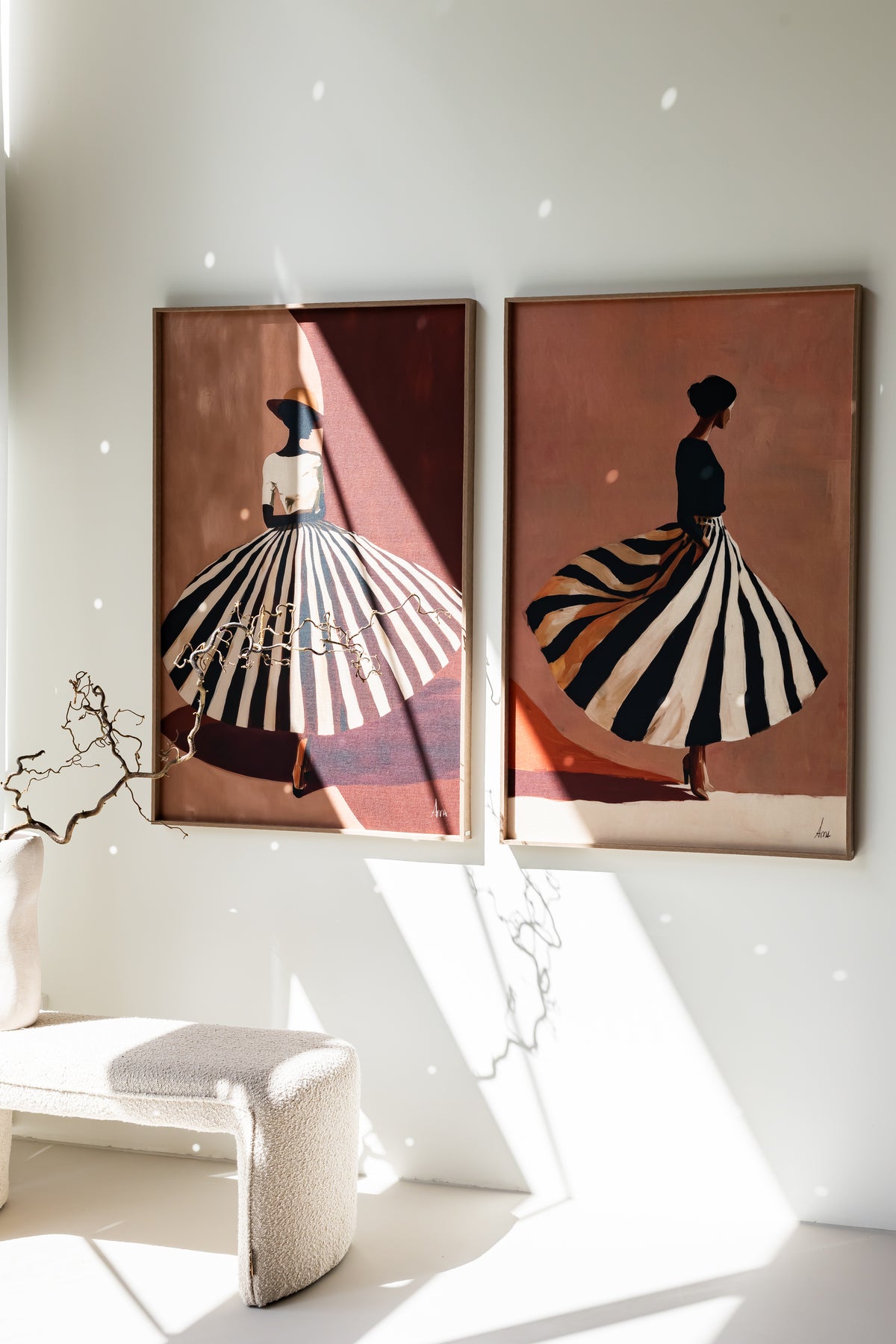

Reverberation in your open-plan kitchen? Here's how to restore peace

Open kitchen acoustics usually have nothing to do with a badly chosen kitchen. They come from the mix of concrete, tiles, glass, and a high ceiling that you find in almost every open kitchen. Sound bounces back faster there than anywhere else in the house, and an open kitchen is where you hear it loudest: pots and pans, an extractor hood, a conversation at the kitchen island that carries everywhere. An acoustic artwork fixes that without making you give up the open layout.
Open kitchen acoustics: why does this space echo so much?
An open kitchen often combines all the hard surfaces at once: a tile or natural stone floor, a stone or composite countertop, glass cabinet doors, and thanks to the open connection to the living room, even more volume for sound to ring around in. There's also usually little fabric, no curtains or rugs, to break up some of that sound. That makes the open kitchen the most echoey room of all in many homes.
What often goes wrong with open kitchen acoustics?
The most common mistake is thinking a nice rug in the living room will solve the kitchen problem too. It won't: sound that starts in the kitchen itself (pots and pans, an extractor hood, a conversation at the island) bounces back before it ever reaches the living room. So you have to tackle the echo where it starts, in the kitchen itself, not around it.
Where do you hang an acoustic artwork in an open kitchen?
Choose the wall opposite the kitchen island or the hardest surface, often a window or a blank wall next to the cabinets. If the kitchen runs into the living room, hang one not only in the kitchen itself but also where the two spaces meet, because that's often where the most echo builds up. Not sure about the size? Tape it off on the wall with painter's tape first, and you'll see right away how it looks.

Which artwork suits an open kitchen?
For an open kitchen we often recommend a higher absorption level than in a regular living room, simply because more hard surfaces are in play at once. Extra (80% absorption) or Ultimate (100% absorption) usually works noticeably better here than Essential. As for style, customers often pick a calm, plain piece for an open kitchen, one that looks serene among all the cabinets and appliances instead of competing with the kitchen itself.
Does it also work if the kitchen runs into the living room?
That's exactly when it matters to think carefully about where you hang it. An open kitchen that runs into the living room is just the kind of space where one artwork often isn't enough: one piece in the kitchen and a second at the busiest spot in the living room absorb sound on both fronts. We go into this in more detail, with a concrete example, in Acoustic panels for the living room: stylish sound dampening.
How much do you need for an open kitchen?
In a smaller, enclosed open kitchen, one artwork is often already noticeable. In a large open kitchen and living room combination, with lots of hard surfaces and volume, two artworks work better, spread over the two spots with the most echo. If you're not sure, send us a photo of your space, and we'll happily think along with you, no obligation. If no standard size fits your wall, for example because of a narrow stretch of wall next to the cabinets, take a look at the options for custom-made artworks.
Curious which artwork suits your kitchen? Take a look at the bestsellers, or order a sample box to see the colors and material at home. The amount is refunded with your order.
Frequently asked questions about open kitchen acoustics
Why does an open kitchen echo more than other rooms?
Because of the mix of hard surfaces (tile, stone, glass), little fabric, and often a bigger volume thanks to the open connection to the living room. That combination makes sound bounce back faster and for longer than in a regular, enclosed room.
Which absorption level is best for an open kitchen?
Extra (80%) or Ultimate (100%) usually works noticeably better than Essential, because an open kitchen generally has more hard surfaces at once than an average living room.
Is one artwork enough for an open kitchen that runs into the living room?
Often not completely. In a large, continuous space, one artwork in the kitchen itself plus a second at the busiest spot in the living room works better than a single piece.
Where is the best place to hang the artwork in an open kitchen?
Opposite the kitchen island or the hardest surface, like a window or a blank wall. If the kitchen runs into the living room, also look at the spot where the two spaces meet.