

Improve acoustics: 7 tips to reduce reverb

You can improve acoustics by adding soft, open materials to a room, as these absorb sound instead of reflecting it. Think of a rug, curtains, or more specifically: an acoustic felt art piece. These seven tips will help you on your way, from small adjustments to a lasting solution.
Do you know that feeling? You walk through your house and somewhere a room feels restless, without you knowing exactly why. Often, it's sound that lingers, reverberation. Below are seven tips that we most often advise ourselves, from very simple to a solution that combines sound and style.
Which tips help most against reverberation?
1. Add soft materials
A rug, curtains, an upholstered sofa, or a few pillows break up sound that would otherwise reflect off hard surfaces. A simple first step that makes an immediate difference in almost any room.
2. Hang acoustic wall decoration
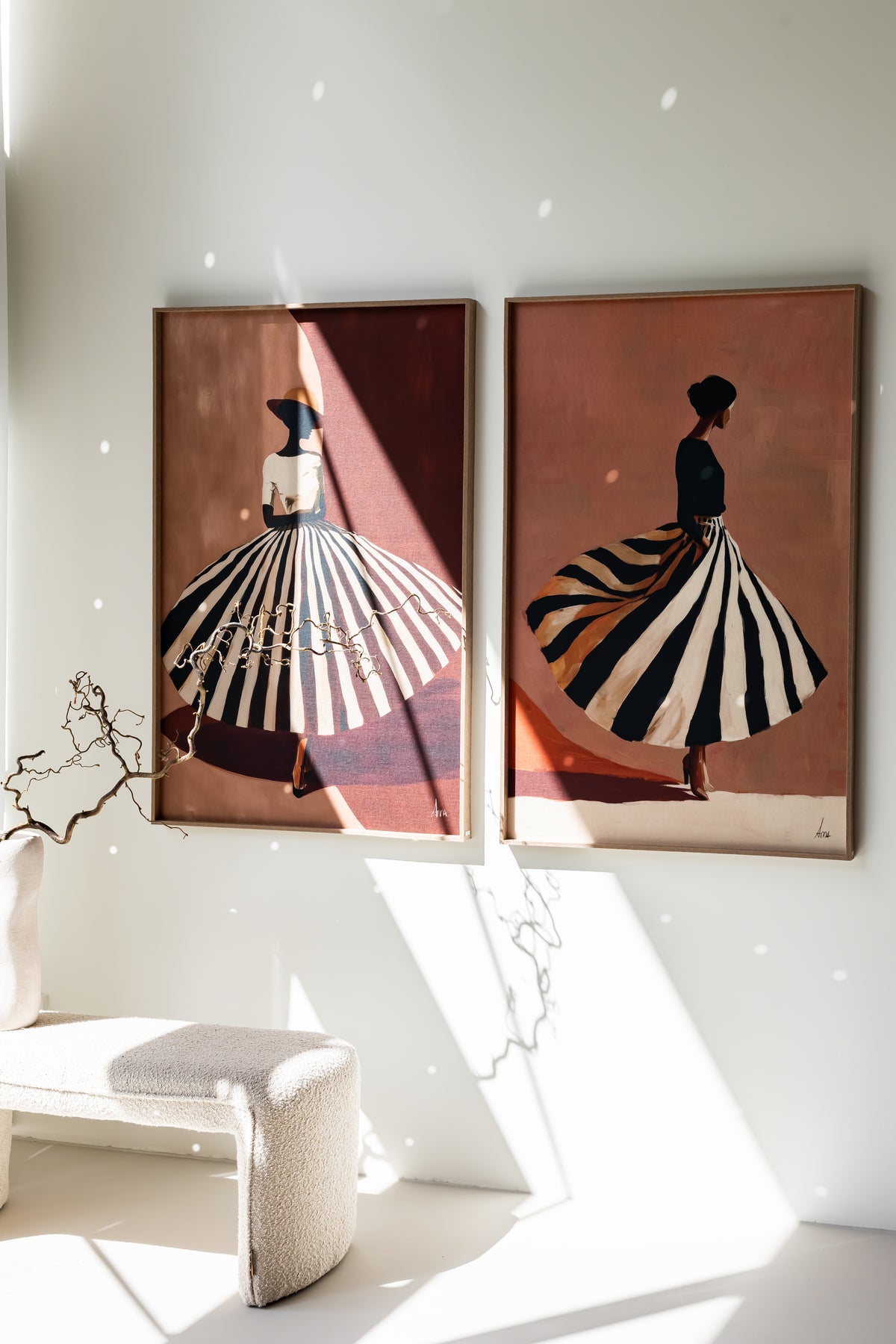
An artwork made of recycled felt, such as the artworks by Pieces of Art, specifically dampens sound where it hangs, and also serves as an immediate eye-catcher on the wall. Bestsellers like Noé and Noah are often hung by customers precisely above the sofa or opposite a window, where most reverberation occurs. Customer Chantal deliberately chose a sleek, minimalist artwork: "This piece is even better than I had imagined, and it helps to soften the room's reverberation." For a highly reverberant room, a larger size or a combination of two works works best, such as Ezer & Ezra.

3. Use window coverings
Curtains or roman blinds dampen sound that would otherwise reflect off the glass, especially useful for large windows or a conservatory.
4. Create nooks in the space
A cabinet, a room divider, or a cluster of furniture breaks the straight line along which sound normally rushes unhindered through a room.
5. Place plants
Many leaves break up and absorb sound a little, and they definitely contribute to the atmosphere. See it as a nice addition, not a primary solution; you'd need quite a few for a noticeable difference.
6. Choose upholstered furniture
An upholstered chair or sofa absorbs sound that falls directly on it, instead of reflecting it as wood or metal would.
7. Experiment with the layout
Sometimes it's not about new items, but about where everything is placed. A sofa currently against a bare wall reflects sound differently than if it were in a corner. Sometimes a small shift can make a difference.
Which tip is best for your home?
That depends on what you already have and how much you want to change. Do you have bare walls that are crying out for something? Then acoustic wall decoration is the most rewarding tip for the least effort: you hang it up just as you would with any painting, and it immediately contributes to the acoustics. If you want to try small things first? Start with a rug, curtains, or a different layout, and build from there.
Curious how the colors of an acoustic artwork would look in your space? Order a sample box; the amount will be refunded with your order, or view the bestsellers directly.
How many of these tips do I need?
Often, one large addition in the busiest reverberation spot is already noticeable, such as an artwork above the sofa or opposite a window. In a strongly reverberating, large space, a combination works best, for example, a rug and an artwork. Want to read more about where reverberation specifically comes from? We explain it in Reverberation at home: cause and the most beautiful solution.
Would you rather not decide for yourself and just want tailored advice? Send us a photo of your space, we'll gladly think along with you without obligation.
How quickly do you notice a difference?
With most of the tips above, you'll notice something on the very same day: laying a rug or hanging curtains immediately creates a softer soundscape. The same applies to acoustic wall decoration; as soon as the artwork is hung, it starts dampening sound. Where people sometimes go wrong: waiting too long for a second addition because the first one "helped a little." In a large or persistently reverberant room, one small adjustment is often not enough, and it's the combination of two tips (e.g., a rug and wall decoration) where the difference truly becomes noticeable.
Frequently asked questions about improving acoustics
What is the fastest way to reduce reverberation?
A large rug or curtains offer the quickest, visible difference, as you can lay or hang them immediately. For a lasting and stylish result, acoustic wall decoration works best, as it is specifically placed where reverberation occurs and is not just a side effect of other furniture.
Do plants really help against reverberation?
A little, but the effect is limited. For noticeable dampening, you need materials specifically designed to absorb sound, such as felt, a thick rug, or heavy fabric.
Does one acoustic artwork make a room completely silent?
No, to be honest. One piece noticeably dampens reverberation but doesn't make a room completely silent. The more felt you hang, the greater the effect; for a highly reverberant room, we recommend a larger size or two works.
Can I combine multiple tips?
Certainly, and for a strongly reverberant room, we recommend it. A rug plus acoustic wall decoration often works better than one of the two alone.